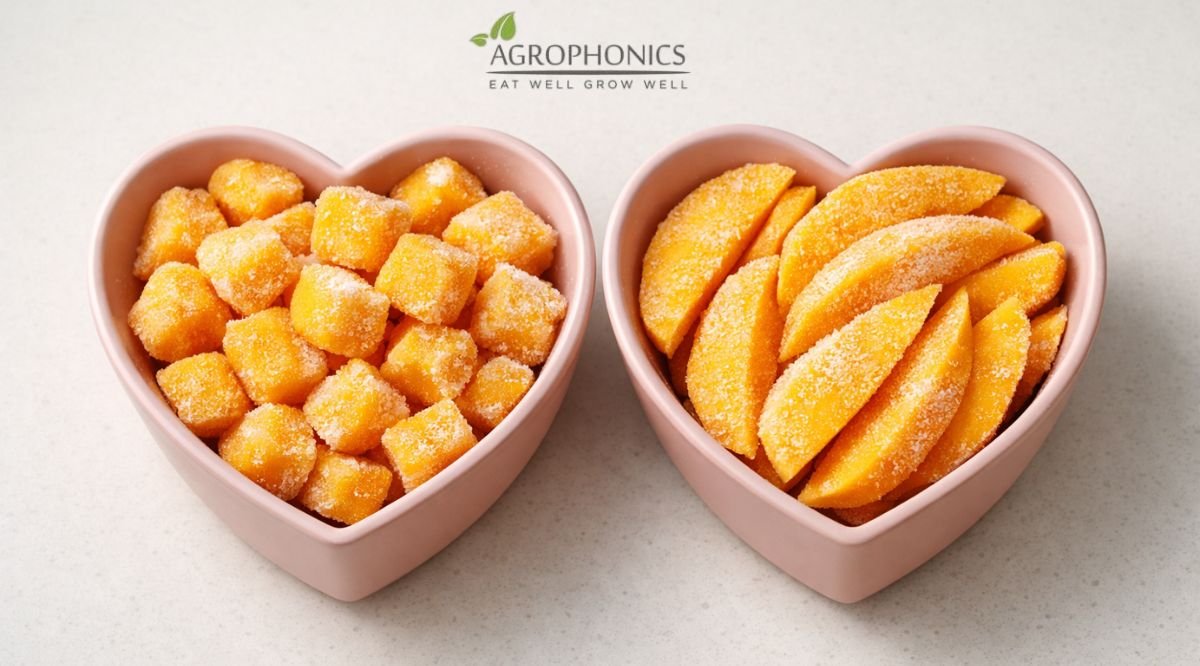
Frozen mango, especially Alphonso, retains its core nutrients when preserved at peak ripeness, making it a dependable source of Vitamin A, Vitamin C, and antioxidants. It offers a consistent, hygienic, and ready-to-use way to include mango in your daily diet without depending on seasonality.
Mango and Immunity: What Actually Matters
Mango is often associated with indulgence, but its nutritional profile tells a more useful story. Alphonso mango, in particular, contains a combination of vitamins and plant compounds that support everyday health.
Vitamin C plays a role in immune defence and recovery. Vitamin A supports skin integrity and vision, while naturally occurring antioxidants help reduce oxidative stress caused by heat, pollution, and lifestyle factors.
The challenge isn’t whether mango is healthy. The real question is consistency how often can you realistically include it in your routine without dealing with spoilage, preparation time, or fluctuating quality?
The Limitation of Fresh Mango in Daily Use
Fresh Alphonso mango is seasonal, delicate, and highly variable. Even within the same batch, ripeness and taste can differ. Once purchased, it requires immediate attention washing, peeling, cutting, and timely consumption.
There are also practical concerns:
- Overripe mangoes leading to wastage
- Underripe mangoes lacking flavor
- Exposure during transport and storage
- Limited shelf life once cut
For occasional consumption, this works. But for regular intake, it becomes inconsistent.
What Changes With Frozen Mango
Frozen mango addresses these exact limitations by shifting when and how the fruit is preserved.
Instead of harvesting early and allowing it to ripen during transport, mangoes are selected at peak ripeness and then frozen. This timing is critical. It ensures that both taste and nutrients are captured when they are at their highest.
From that point onward, the fruit remains in a controlled state. There is no further ripening, no degradation due to heat, and no pressure to consume it immediately.
This changes mango from a seasonal fruit into a stable, repeatable part of your diet.
Understanding Nutrient Retention in Frozen Mango
There is a persistent assumption that frozen fruit is nutritionally inferior. In practice, the difference often comes down to handling rather than format.
Fresh mango can lose nutrients during:
- Extended transportation
- Exposure to heat
- Storage at room temperature
- Delays between purchase and consumption
Frozen mango, on the other hand, is processed quickly after harvest. Rapid freezing slows down enzymatic activity, which is responsible for nutrient breakdown.
This means:
- Vitamin content remains largely stable
- Antioxidants are preserved
- The fruit does not continue to degrade over time
The result is not a compromise, but in many cases, a more controlled and predictable nutritional profile.
Fresh vs Frozen Mango: A Functional Comparison
| Aspect | Fresh Alphonso Mango | Frozen Alphonso Mango |
| Seasonality | Limited | Available throughout the year |
| Ripeness Control | Unpredictable | Fixed at peak ripeness |
| Preparation Effort | High | None |
| Shelf Life | Short | Extended |
| Waste | Common | Minimal |
| Nutrient Stability | Can decline over time | Largely preserved |
| Handling Exposure | Multiple touchpoints | Controlled processing |
This comparison is less about which is better in absolute terms and more about which is more practical for consistent use.
The Role of Hygiene and Handling
Another factor that often gets overlooked is handling.
Fresh mangoes typically pass through several stages harvesting, sorting, transport, storage, and retail display. Each stage introduces variability in hygiene and storage conditions.
Frozen mango follows a different path. Once processed, it is sealed and maintained within a cold chain. This reduces external exposure and stabilises quality.
For buyers who are more conscious about food handling and storage conditions, this becomes an important consideration.
Making Mango a Daily Habit Instead of a Seasonal Treat
One of the biggest advantages of frozen mango is that it removes decision fatigue.
You don’t need to check:
- Whether mangoes are in season
- Whether they are ripe enough
- Whether they will last the next two days
It is already prepared and portionable. You use what you need and store the rest without concern.
Over time, this shifts mango from being an occasional purchase to a regular part of daily intake.
Choosing the Right Format: Pulp vs Slices
Frozen Alphonso mango is typically available in more than one format, and the choice depends on how you prefer to consume it.
Mango pulp offers a smooth, uniform texture that is easy to portion and use instantly. It works well in situations where consistency matters and you don’t want to deal with any preparation. For regular consumption, it tends to be the more convenient option.
Mango slices, on the other hand, retain the original structure of the fruit. They offer a more familiar experience, closer to eating freshly cut mango, but without the effort of peeling and slicing. This format is better suited for those who prefer texture and bite.
Both options serve different purposes, but they share the same advantage access to Alphonso mango in a form that is ready when you need it, without depending on seasonality or preparation time.
Why Frozen Mango Is Gaining Preference
The shift toward frozen mango is not driven by novelty. It is driven by repeat usability.
Buyers are increasingly prioritizing:
- Predictable quality over variability
- Time efficiency over preparation
- Reduced waste over bulk buying
- Clean handling over open storage
These are practical considerations, not trends. And frozen mango aligns with them closely.
Supporting Immunity Through Consistency
Nutritional benefits only matter when they are consumed regularly.
Frozen Alphonso mango makes that easier by:
- Removing barriers to daily intake
- Preserving essential vitamins
- Offering a stable, ready-to-use option
Instead of relying on occasional consumption during peak season, it enables continuity.
That continuity is what makes a difference over time.
Why Source and Processing Matter
Not all frozen mango products deliver the same outcome. The final quality depends on how the fruit is sourced, processed, and stored.
Key factors include:
- Selection of properly ripened Alphonso mangoes
- Clean and controlled processing environments
- Maintenance of an uninterrupted cold chain
- Absence of unnecessary additives
Agrophonics focuses on these aspects, ensuring that the mango you receive reflects the quality expected from Alphonson, both in taste and nutritional value.
Making Mango Easy to Include, Every Day
Fresh Alphonso mango will always be associated with the season, but relying only on seasonal availability limits how often you can actually enjoy it.
Frozen mango changes that by removing the usual constraints. There’s no need to plan around ripeness, no urgency to consume it quickly, and no variation in quality from one purchase to another. It simply becomes something you can keep on hand and use whenever it fits into your day.
Over time, this consistency is what makes the real difference. Instead of being an occasional indulgence, mango becomes part of a more regular, dependable routine.
For those who prefer having that level of convenience without compromising on taste or quality, thoughtfully sourced options like those from Agrophonics make it easier to keep Alphonso mango within reach throughout the year.
FAQs
Q1. Is frozen mango as nutritious as fresh mango?
Answer: When frozen at peak ripeness, it retains most of its nutrients and remains a reliable source of vitamins.
Q2. Does frozen Alphonso mango taste the same?
Answer: It maintains a consistent taste since it is preserved when fully ripe.
Q3. Can frozen mango be consumed daily?
Answer: Yes, it can be included as part of a balanced diet without the limitations of seasonal availability.
Q4. Does frozen mango contain added sugar or preservatives?
Answer: High-quality frozen mango, like properly processed Alphonso, typically does not require added sugar or preservatives.
Q5. Can frozen mango be eaten directly?
Answer: Yes, it can be consumed after slight thawing. Many people prefer it chilled, especially in warmer weather.