



Every mango lover in India has experienced this moment. You bring home a box labelled ‘Alphonso’, cut one open, and something feels missing. The taste may be sweet, the texture may be smooth, but the aroma does not match expectations.
That distinct fragrance is what separates an average mango from a true Ratnagiri Alphonso. This article explains what creates that aroma, why many mangoes fail to deliver it, and how to identify and buy authentic fruit across India.
What Makes Ratnagiri Alphonso Mango Aroma So Unique
The aroma of Ratnagiri Alphonso mango is not accidental. It is the result of a rare combination of geography, soil, and natural ripening.
Ratnagiri is located in the Konkan region of Maharashtra, close to the Arabian Sea. The region has laterite soil, which is rich in minerals like iron and gives the fruit its distinct character. The coastal conditions, with warm days and cooler nights, help the mango develop a strong natural fragrance. This aroma comes from natural compounds formed during the growth stage of the fruit. When the mango ripens on its own, these compounds mature fully, creating that rich, sweet smell that is noticeable even before cutting the fruit. Many other regions grow Alphonso mangoes, but they do not have the same soil composition or coastal influence. This is why the fragrance often falls short.
The Science Behind the Aroma
The smell of a mango is linked to volatile organic compounds such as terpenes and lactones. These compounds develop slowly while the fruit matures on the tree and continues during natural ripening. In naturally ripened Alphonso mango, these compounds remain intact. This leads to a strong and pleasant aroma that spreads as soon as the fruit is sliced. In contrast, mangoes that are artificially ripened using chemicals lose much of this natural profile. The outer appearance may look appealing, but the internal chemistry does not fully develop. As a result, the aroma becomes weak or flat.
This is one of the main reasons why buyers often feel disappointed after purchasing mangoes that look similar but lack fragrance.
Ratnagiri vs Other Alphonso Mangoes Why Others Fail
Not all Alphonso mangoes are equal. The two most common types available in the market are Ratnagiri and Devgad Alphonso.
While both come from Maharashtra, there are noticeable differences.
Ratnagiri Alphonso mango
- Strong and sweet aroma
- Balanced sweetness with slight tang
- Smooth, fiberless pulp
- Medium size with rich saffron color
Other Alphonso varieties
- Mild or weak fragrance
- Often sweeter but less complex in taste
- Texture may vary
- Color may look similar but lacks depth
Another major factor is the ripening process. Many sellers use calcium carbide or other chemicals to speed up ripening. This affects not only the aroma but also the taste and safety of the fruit.
Supply chain handling also plays a role. Mangoes that travel long distances without proper care lose their natural smell due to heat and pressure damage.
How to Identify Authentic Ratnagiri Alphonso Mangoes
With growing demand, it has become common to find mangoes labelled as ‘Ratnagiri’ even when they are not. Knowing how to identify genuine fruit helps you avoid disappointment.
Look for these signs:
Smell
A real Ratnagiri Alphonso mango has a noticeable fragrance even before cutting. If there is little to no smell, it is likely not authentic.
Skin Appearance
The skin is golden yellow with slight red patches. It should not be overly shiny or artificially polished.
Texture
The fruit feels firm yet slightly soft when ripe. Overly hard or overly soft mangoes may have been handled poorly.
Pulp Color
Inside, the pulp should be deep saffron. Pale yellow pulp often indicates lower quality.
Source Transparency
Trusted sellers mention sourcing from Ratnagiri farms and provide details about harvesting and ripening.
Why Aroma Matters Beyond Taste
Aroma is not just about sensory pleasure. It is also a sign of quality and freshness. When a mango has a strong natural smell, it indicates that the fruit has ripened properly and retained its nutritional value. It also suggests minimal chemical interference. Aromatic mangoes provide a better eating experience. The smell prepares the senses even before the first bite, making the fruit more enjoyable.
For gifting, aroma becomes even more important. A box of mangoes that fills the room with fragrance creates a lasting impression.
How Agrophonics Delivers Authentic Ratnagiri Alphonso Across India
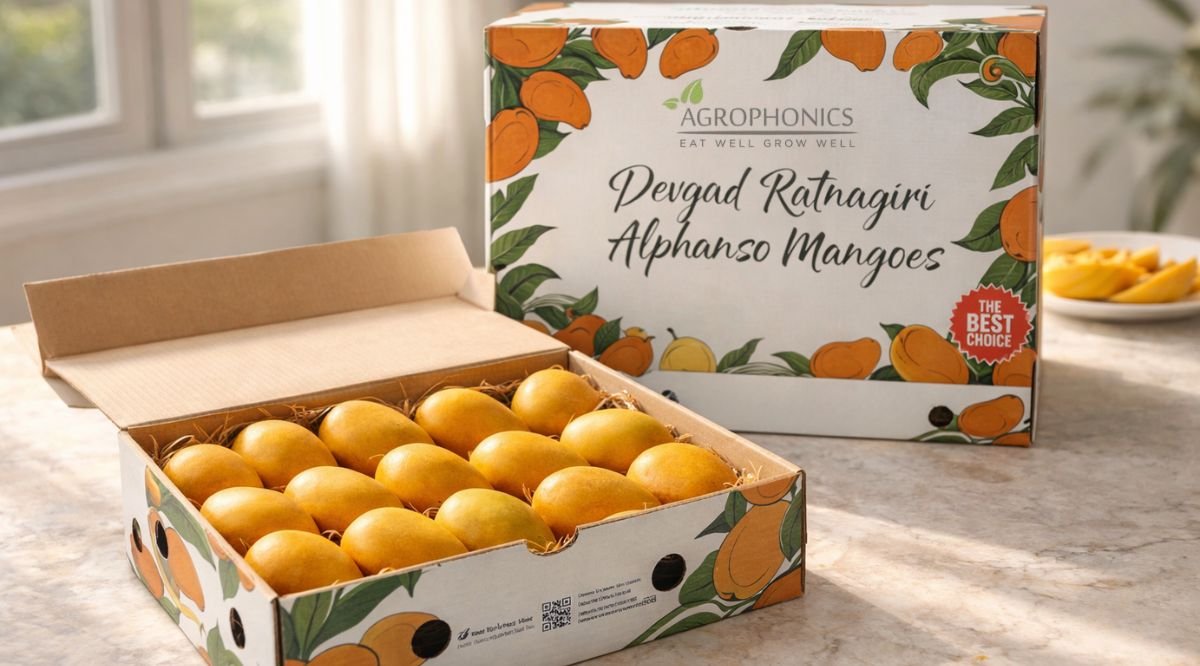
At Agrophonics, the focus is on delivering authentic Ratnagiri Alphonso mango online India buyers can trust. The sourcing process begins directly from farms in Ratnagiri. The mangoes are harvested at the right maturity stage and allowed to ripen naturally without chemical treatment. Careful packaging helps maintain the fruit’s quality during transit. Each mango is handled to reduce pressure damage and preserve its natural aroma. This approach helps customers experience the real fragrance and taste that Ratnagiri Alphonso is known for, even when delivered across different parts of India.
Why Choosing the Right Alphonso Mango Changes Your Entire Experience
Most buyers focus on appearance when selecting mangoes, but aroma is what truly defines quality. A mango that looks perfect on the outside can still disappoint if it lacks fragrance.
When you choose a genuine Ratnagiri Alphonso mango, you notice the difference immediately. The scent is rich, natural, and easy to recognize. It reflects careful cultivation, proper ripening, and minimal handling damage.
This is where many sellers fall short. Mixed sourcing, rushed ripening, and long storage reduce the natural character of the fruit. The result is a mango that may look appealing but feels ordinary when eaten. For buyers across India, access to authentic fruit depends on the source. A reliable supplier focuses on origin, ripening method, and delivery conditions. These factors directly affect aroma, taste, and shelf life. Agrophonics works closely with Ratnagiri farms and follows natural ripening practices so that the buy Ratnagiri Alphonso mango online India experience matches what customers expect from premium fruit. Each batch is selected to maintain consistency in aroma and taste.
If your goal is to enjoy Alphonso mangoes the way they are known for, paying attention to aroma is the simplest and most effective way to choose right.
Experience the True Aroma of Ratnagiri Alphonso at Your Doorstep
When it comes to Alphonso mangoes, aroma is not a small detail. It is the first and most reliable indicator of authenticity. From the soil of Ratnagiri to the way the fruit is ripened and delivered, every step influences that fragrance.
For buyers investing in premium mangoes, understanding these factors helps avoid disappointment and ensures that every box delivers what Alphonso is known for.
If you are planning to enjoy the authentic Ratnagiri Alphonso mango aroma this season, it is always better to act early. Pre-booking allows you to secure fresh harvest batches before peak demand affects availability and quality.
Agrophonics offers:
- Pre booking orders for early access to fresh harvest
- Pan India delivery with careful packaging
- Naturally ripened mangoes sourced directly from Ratnagiri farms
- Transparent sourcing and consistent quality
Shop now from Agrophonics and bring home mangoes that deliver the fragrance, taste, and richness that Alphonso is truly known for.
Common Questions About Ratnagiri Alphonso Mango
Q1. Why does Ratnagiri Alphonso mango smell stronger than others?
Answer: The strong aroma comes from natural compounds formed due to the unique soil and coastal conditions of Ratnagiri, along with natural ripening.
Q2. How can I check if my mango is naturally ripened?
Answer: Look for a natural smell, slight softness, and uniform color. Artificially ripened mangoes often lack fragrance.
Q3. Is Ratnagiri Alphonso worth the higher price?
Answer: Yes, due to its superior aroma, taste, and limited availability, it is considered a premium fruit.
Q4. Can I buy authentic Ratnagiri Alphonso mangoes online in India?
Answer: Yes, but it is important to choose a trusted seller that provides clear sourcing information and follows natural ripening methods.